
WELCOME BONUS 300%
UP TO €2000 + 100
FREE SPINS
UP TO €2000 + 100
FREE SPINS
Home → Games
Casino games at Casinos-Vulkan-Vegas
Blackjack flow: cards, decision, payout 3:2
In Blackjack, the payout for a win is typically 3:2, meaning a $10 bet would yield $15. However, a less favourable rule change to a 6:5 payout for Blackjack, as seen in some games using 6 decks, increases the house edge by 1.39 percentage points. This reduction significantly alters the expected return for the player.
The decision-making process in Blackjack involves strategic choices based on the player's hand and the dealer's upcard. Rules like 'Dealer Hits Soft 17' can increase the house advantage by 0.22 percentage points. Conversely, options such as 'Double After Split' can improve the RTP by approximately 0.14 percentage points.
A key strategic option is 'Late Surrender', where a player can forfeit half their bet after the dealer checks for Blackjack. This rule modification can improve the RTP by about 0.08 percentage points, offering a way to mitigate losses in unfavourable situations. Early Surrender, though rarer, provides a more substantial RTP improvement.
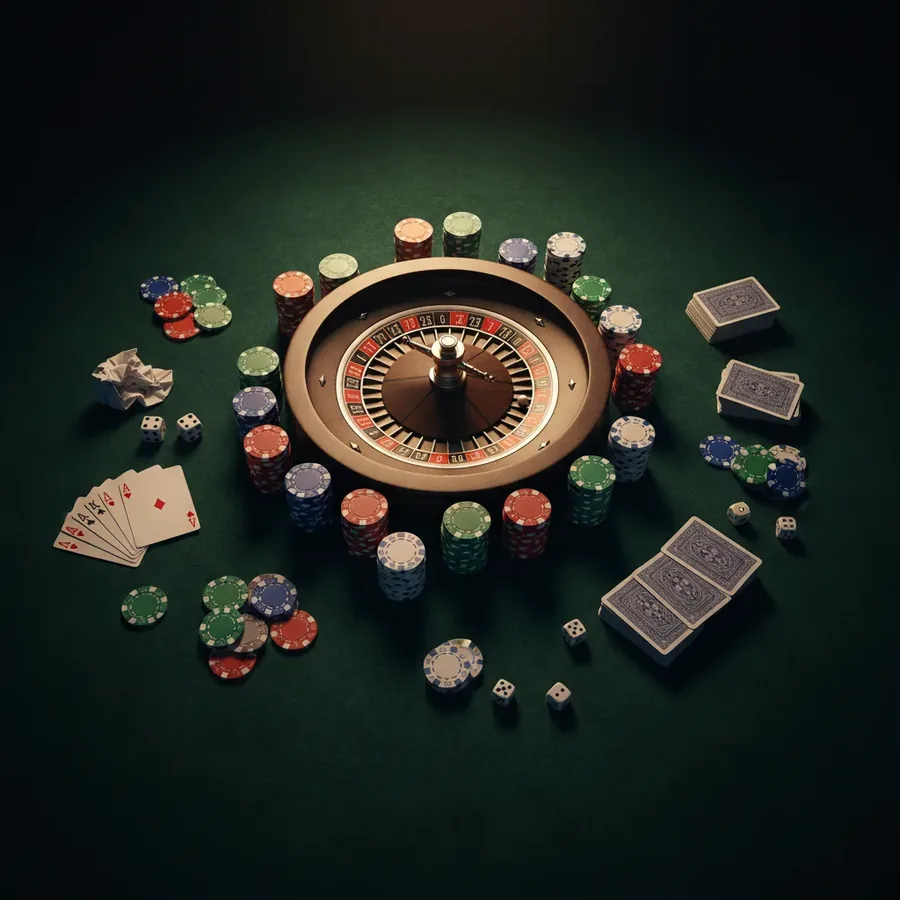
How many sectors does the Game Show wheel have?
The structure of a Game Show wheel, often featuring numbered segments, can vary significantly. For instance, a standard European Roulette wheel, which shares some visual similarities in its segmented design, comprises 37 sectors. These sectors consist of numbers 1 through 36, plus a single zero.
In contrast, an American Roulette wheel, which features an additional zero (00), expands the total number of sectors to 38. This dual-zero configuration directly impacts the house edge, making certain bets, like the Five Number Bet covering 0, 00, 1, 2, and 3, particularly disadvantageous with a 7.89% house advantage.
The complexity and number of sectors on a wheel are crucial determinants of game probabilities. A higher number of sectors, especially when combined with specific betting payouts, generally leads to a greater house edge. For example, the Five Number Bet on an American wheel covers 5 of its 38 sectors.
Dozen 2:1: Twelve Numbers, One Third Coverage
Bets on a 'Dozen' in Roulette cover twelve specific numbers, representing one-third of the wheel's playable outcomes. On a European Roulette wheel with 37 sectors, a Dozen bet pays 2:1. This payout structure contributes to a house edge of 2.70% on all bets.
This 2:1 payout for a Dozen bet, alongside Column bets, is standard across European Roulette games where the wheel has 37 sectors. The RTP for such bets remains at 97.30%. This contrasts with French Roulette with La Partage, where even-money bets see an improved RTP to 98.65% when a zero occurs.
The coverage of twelve numbers for a 2:1 payout means that for every three units wagered, players might expect to win two units if successful. However, the presence of the zero sector means that roughly one-third of the outcomes result in a loss for Dozen bets, maintaining the casino's consistent advantage.
House Edge and RTP: Two Names for the Same Number
The House Edge and the Return to Player (RTP) are two sides of the same coin, representing the casino's statistical advantage and the player's theoretical long-term return, respectively. For instance, French Roulette with La Partage offers an attractive RTP of 98.65%, corresponding to a house edge of just 1.35%.
A higher house edge directly translates to a lower RTP for the player. Consider the Baccarat Tie bet, which boasts a substantial house advantage of 14.36%, resulting in a relatively low RTP of 85.64%. This significant difference highlights the impact of specific bet types on overall player returns.
Understanding these figures is crucial for players aiming to maximize their playtime. A game like Video Poker Jacks or Better 9/6, when played with optimal strategy, offers an exceptional RTP of 99.54%, indicating a mere 0.46% house edge. This is significantly lower than most table games.
Corner Pays 8:1, Dozen Only 2:1
In European Roulette, a 'Corner' bet, covering four adjacent numbers, offers a payout of 8:1. This is a significantly higher payout ratio compared to the 2:1 payout for a 'Dozen' bet, which covers twelve numbers. The house edge on European Roulette remains constant at 2.70% for all these bets.
The difference in payout ratios between Corner and Dozen bets reflects the risk and coverage involved. While a Corner bet has a higher payout, it covers fewer numbers, increasing its volatility. Conversely, the Dozen bet offers a lower payout but covers a much larger segment of the wheel.
These varied payouts are fundamental to the mathematical structure of Roulette, ensuring the house edge is maintained across different betting options. For example, a Straight bet pays 35:1 but covers only a single number, while a Dozen bet pays 2:1 and covers twelve numbers, with the casino retaining 2.70% in both scenarios.
Game categories at a glance
| Category | Examples | Stakes From | Highlight |
|---|---|---|---|
| Slots | Cygnus 4, Mental, Razor Shark | 0,10 EUR | thousands of titles |
| Table games | Roulette, Blackjack, Baccarat | 0,50 EUR | classic rules |
| Live casino | Blaze Roulette, MONOPOLY Live | 0,20 EUR | real dealers |
| Jackpot games | Mega Moolah, Divine Fortune, Age of the Gods | 0,20 EUR | progressive pools |
| Instant games | Aviator, Plinko, Mines | 0,10 EUR | fast rounds |
| Video poker | Jacks or Better, Deuces Wild | 0,25 EUR | strategy based |
When to Surrender 16 vs 10?
The Blackjack rule for Surrender, specifically Late Surrender, allows a player to forfeit half their bet after the dealer checks for blackjack. This rule improves the Return to Player (RTP) by approximately 0.08 percent points, a beneficial modification for the player.
While Early Surrender offers a more significant improvement, potentially up to 0.6 percent points, it is considerably rarer. The standard Late Surrender, as found in many games, provides a modest but consistent benefit when faced with difficult hands.
In strategic play, understanding when to deploy the surrender option is key; for instance, with a 16 against a dealer's 10, a surrender is often advised. This rule, when applicable, offers a player an escape route from potentially losing hands, thereby preserving capital.
Hold or discard five cards: the decision
In Jacks or Better Video Poker, the optimal strategy for a full pay (9/6) hand with a Royal Flush payout of 800 coins (for 5 coins wagered) involves holding specific cards. The decision to hold or discard five cards is central to maximizing winnings.
A critical aspect of this strategy revolves around pairs; holding Jacks or better provides an instant win, while holding two pairs or three of a kind offers a higher payout. The game's RTP is a theoretical 99.54% when played with optimal strategy.
For example, if dealt a hand containing a pair of Jacks and three other unsuited cards, the decision is to hold the pair of Jacks and discard the rest. This approach aims to improve the hand towards a better paying combination, with a house edge of 0.46%.
When is Splitting Aces and Eights Sensible?
Splitting Aces and Eights in Blackjack is a crucial strategic decision influenced by specific rules. Resplitting Aces can improve the RTP by 0.08 percent points, making it a favourable option when available.
Dealer Hits Soft 17 (H17) rule increases the house edge by 0.22 percent points, making strategic splits even more important. When a player is dealt two eights, splitting them creates two potentially stronger hands.
The decision to split is directly tied to the potential for improving a weak starting hand into two more favourable ones. While Aces are typically split, the strategy for eights is also a cornerstone of effective Blackjack play, aiming to mitigate the house edge.
Splitting in Blackjack: one hand becomes two
Blackjack offers players the option to split their hand when dealt two cards of the same rank, effectively turning one hand into two. This action, along with doubling down and hitting soft 17, modifies the game's RTP.
The rule allowing Double After Split (DAS) improves the RTP by approximately 0.14 percent points, enhancing the player's advantage. Splitting eights, for instance, transforms a low-value hand into two potentially better starting points.
Different Blackjack variations can have varying impacts; for example, the substitution of a 6:5 payout for Blackjack instead of the standard 3:2 increases the house edge by 1.39 percent points. Strategic splitting is therefore vital for mitigating such rule disadvantages.
Punto Banco: 5 Percent Commission on Banker Wins
In Punto Banco Baccarat, a 5 percent commission is typically applied to winning Banker bets, a rule that influences the house edge. While the Banker bet generally has a lower house edge, this commission needs to be considered.
The Banker bet in Baccarat (8 Decks) has an RTP of 98.76% and a house edge of 1.24%. The Player bet, on the other hand, offers a 1:1 payout and has a slightly higher RTP of 98.76% with a house edge of 1.24%.
The Tie bet in Baccarat presents a significantly higher house edge of 14.36% with an RTP of 85.64%, making it a less favourable option for players seeking consistent returns. The commission on Banker wins is a standard feature across many Baccarat variants.
French Roulette: La Partage Lowers to 1.35 Percent
French Roulette with the La Partage rule offers a significantly reduced house edge on even-chance bets. When a zero is rolled, half of the wager on bets like Red/Black, Odd/Even, or High/Low is returned. This rule directly impacts the casino's advantage, bringing it down to a mere 1.35 percent.
This reduction in house edge is substantial when compared to standard European Roulette, which maintains a 2.70 percent house edge across all bets due to its single zero sector. The La Partage rule, specifically applied to even-chance bets, makes French Roulette a more favorable option for players focusing on these bet types.
For players utilizing this variant, the benefit is a more consistent and lower cost of play over time. For instance, a €10 bet on Red that loses to a zero would see €5 returned, directly impacting potential losses and improving the overall return to player (RTP) to 98.65 percent.
9/6 table: nine for Full House, six for Flush
The Video Poker Jacks or Better 9/6, also known as Full Pay, offers a strong player return with specific payout ratios. This game's name refers to the payouts for two key hands: a Full House pays nine coins for one, and a Flush pays six coins for one. This structure is crucial for achieving its high RTP.
Utilizing optimal strategy on the 9/6 table allows players to reach an RTP of 99.54 percent, resulting in a house advantage of only 0.46 percent. This is significantly lower than many other casino games, making it a popular choice for strategic players seeking value.
For example, a player betting the maximum of five coins to achieve the Royal Flush bonus of 4000 coins would benefit from this structure. The standard deviation for this game is 4.42, indicating a moderate level of volatility for the player.
Why the Double Zero Almost Doubles the House Edge
American Roulette, featuring both a single zero (0) and a double zero (00), presents a substantially higher house edge compared to its European counterpart. The addition of the double zero effectively doubles the number of 'house' pockets on the wheel, directly increasing the casino's advantage.
This structural difference leads to a significant increase in the house edge. While European Roulette has a house advantage of 2.70 percent, American Roulette's standard house edge jumps to 5.26 percent on most bets. The Five Number Bet is a notable exception, carrying an even higher house advantage of 7.89 percent.
This heightened edge means that, on average, players will retain less of their wagers over extended play. For a €10 bet on a single number in American Roulette, the expected return is lower than in European Roulette. The house benefits from the extra zero pocket across all betting outcomes.
6 Decks vs. 8 Decks in House Edge
The number of decks used in Blackjack has a subtle yet measurable impact on the house edge. A game utilizing six decks, for instance, offers a different theoretical return compared to one that uses eight decks. This difference is primarily due to how probabilities shift with fewer decks available.
Specifically, playing Blackjack with six decks results in a slightly lower house edge of 1.85 percent compared to an eight-deck game, which would have a marginally higher edge. While the difference is small, it can accumulate over many hands played, impacting the player's long-term expectation.
This variation is often tied to other rule changes. For example, a six-deck game that pays 6:5 for a Blackjack instead of the traditional 3:2 adds 1.39 percent to the house edge. Understanding these nuances helps players identify tables with more favorable conditions.
Three Roulette Variants, Three House Edges Compared
Online casinos often offer multiple variations of Roulette, each with distinct rules that influence the house edge. European Roulette, with its single zero (0), provides a standard baseline house advantage of 2.70 percent on all bets, offering a consistent level of challenge to players.
French Roulette introduces specific rules like 'La Partage' for even-chance bets, significantly lowering the house edge to 1.35 percent when a zero is rolled. This makes it a more favorable variant for players focusing on outside bets like red/black or odd/even.
In contrast, American Roulette, featuring both a single zero (0) and a double zero (00), presents a considerably higher house edge of 5.26 percent. This double-zero wheel dramatically increases the casino's advantage across the board, making it the least favorable of the three common variants.
Contact
Live - online chat
Banking









Providers












Vulkan Vegas Casino 2026